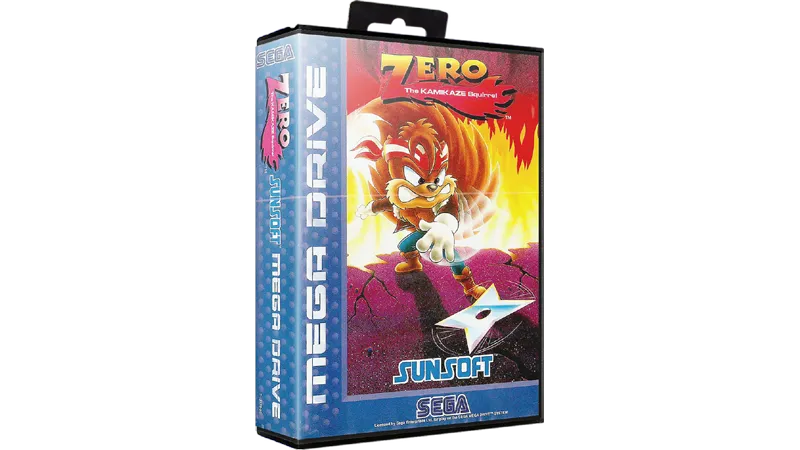

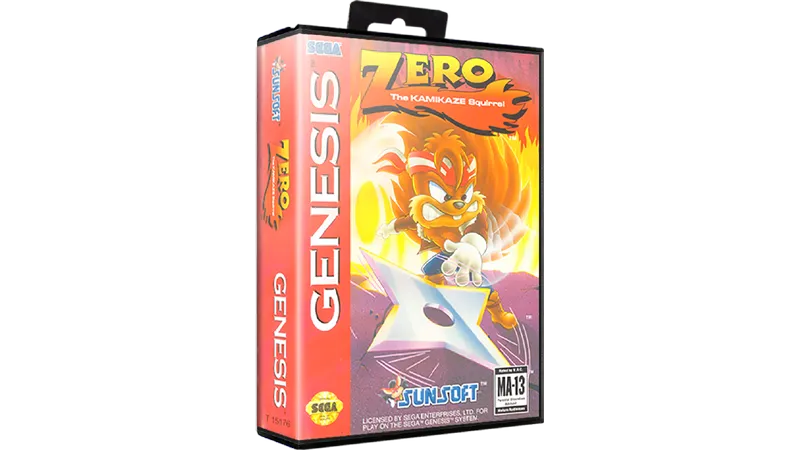


Zero: The Kamikaze Squirrel stands as one of the most surprisingly polished spin-offs of the 16-bit era. Emerging from the shadow of Sunsoft’s *Aero the Acro-Bat*, Zero swaps the circus aesthetic for a darker, more industrial vibe that perfectly captures the "attitude" of the mid-90s. Developed by Iguana Entertainment, the game delivers a refined platforming experience that often surpasses its predecessor in terms of control responsiveness and level flow. Zero feels weighty yet agile, allowing players to navigate complex environments with a level of precision that was rare for the mascot-platformer glut of the time.
The gameplay mechanics center around Zero’s unique arsenal, including nunchucks for close-quarters combat and a limited supply of shurikens for distance. However, the real star of the show is the "swoop" mechanic. By launching into the air and diving, players can gain massive horizontal momentum, turning the game into a high-speed exercise in aerial navigation. This focus on verticality and momentum requires a steep learning curve, as the level design is frequently unforgiving, packed with spikes and enemies positioned to punish reckless play. It is a game that demands mastery rather than casual experimentation.
Visually, the Mega Drive version holds its own with vibrant, well-animated sprites and distinct environments that range from lush forests to polluted factories. While the sound chip produces the typical crunchy percussion associated with the hardware, the soundtrack remains energetic and fitting for a high-stakes rescue mission against the evil Jacques Le Sheets. Zero: The Kamikaze Squirrel is a testament to Iguana’s talent before they moved on to *Turok*, offering a challenging, mechanically deep platformer that remains a cult classic for those who can stomach its high difficulty spikes.