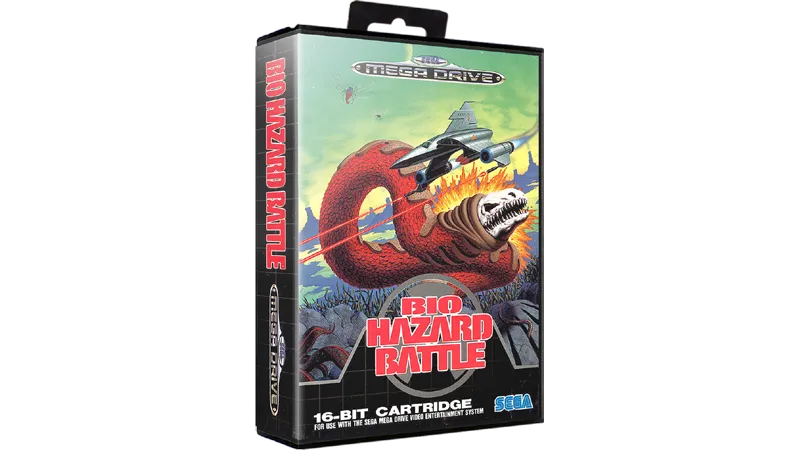



Bio-Hazard Battle remains one of the most visually striking examples of the "biological" sub-genre of shoot 'em ups, carving out a niche that sits somewhere between the organic horror of R-Type and the psychedelic intensity of Darius. Eschewing traditional metallic spaceships, the game casts players as bio-engineered organisms returning to a post-apocalyptic Earth overrun by mutated monstrosities. The aesthetic is grimy, detailed, and unsettling, utilizing multiple layers of parallax scrolling to create a sense of depth that few titles on the Mega Drive could match in 1992. It is a masterclass in atmospheric world-building through sprite work alone.
Mechanically, the game distinguishes itself through its four playable creatures—Orestes, Heth, Electra, and Polybius—each possessing unique movement speeds and weapon configurations. The "Power Star" system is the heart of the experience; players must manage a floating seed that orbits their creature, which can be repositioned to fire in different directions or used to absorb specific projectiles. Collecting colored orbs upgrades this seed into four distinct weapon types, ranging from homing pulses to devastating lasers. This layer of tactical positioning, combined with a rare two-player simultaneous co-op mode, elevates the gameplay beyond a simple reflex test and provides significant replay value.
Beyond the visuals and mechanics, the audio presentation is arguably the game’s most enduring legacy. The soundtrack is a heavy, bass-driven industrial feast that pushes the Yamaha YM2612 FM chip to its limits, perfectly complementing the murky, underwater, and cavernous environments. While it may lack the frantic, blistering pace of Thunder Force IV, its deliberate speed and focus on precision make it a more methodical and rewarding experience. It remains a definitive sleeper hit on the console, offering a dark, moody alternative to the more sanitized arcade ports of the era.