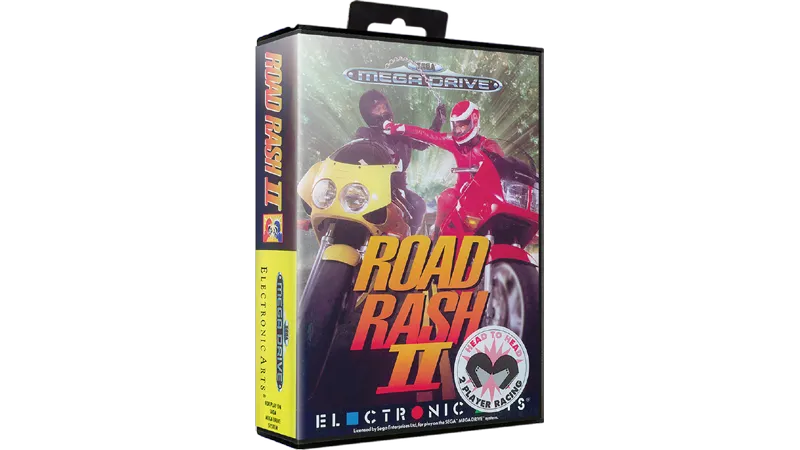

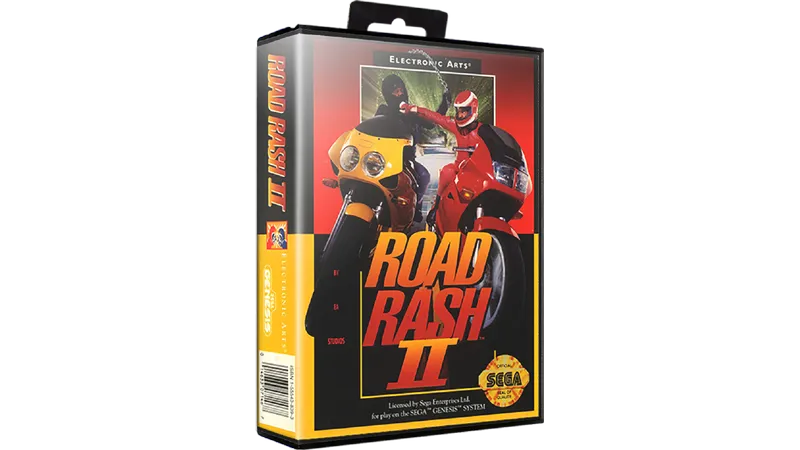

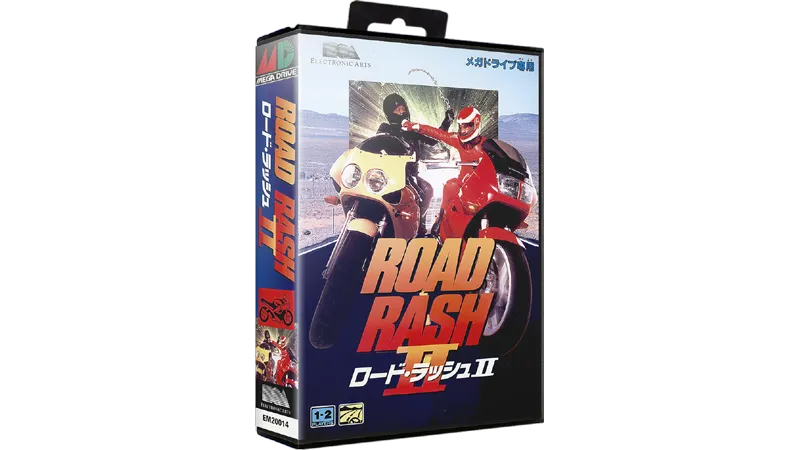

Road Rash 2 represents the absolute pinnacle of 16-bit combat racing, refining every mechanic that made the 1991 original a household name. Electronic Arts doubled down on the "tude" of the era, introducing the iconic heavy chain weapon and a nitro boost system that adds a desperate tactical layer to every straightaway. The game’s sense of speed remains staggering for the Mega Drive’s hardware, utilizing clever sprite scaling to simulate rolling hills and sharp corners across five sprawling US states. Whether you are clubbing a rival off their bike or desperately weaving through civilian traffic, the kinetic feedback and grit of the gameplay are unmatched in the genre.
The most significant technical achievement in this sequel is the inclusion of a split-screen two-player mode, which miraculously maintains a playable frame rate despite the increased processing load. This addition transformed the game into a social staple, as the satisfaction of kicking a friend into the path of an oncoming car provided endless replayability. The career progression also feels more rewarding here; players must manage their winnings to upgrade through three different bike classes, balancing raw speed against durability. The police presence was also heightened, turning the law into a persistent threat that requires genuine skill to outrun or outfight during the high-stakes final laps.
While the Mega Drive library grew increasingly diverse toward the end of its lifespan, with late-era titles like the puzzler Zoop reaching UK and European shelves in 1995 while completely bypassing a Japanese release, Road Rash 2 remained a foundational pillar of the console's identity. It sits comfortably as the best entry in the trilogy, striking the perfect balance between arcade accessibility and simulation depth before the series moved into the experimental 3D era. The punchy FM synthesis soundtrack and the digitized victory screens capture a specific moment in gaming history where EA was at the top of its creative game. It is a visceral, essential masterpiece that defines the rebellious spirit of Sega's 16-bit powerhouse.