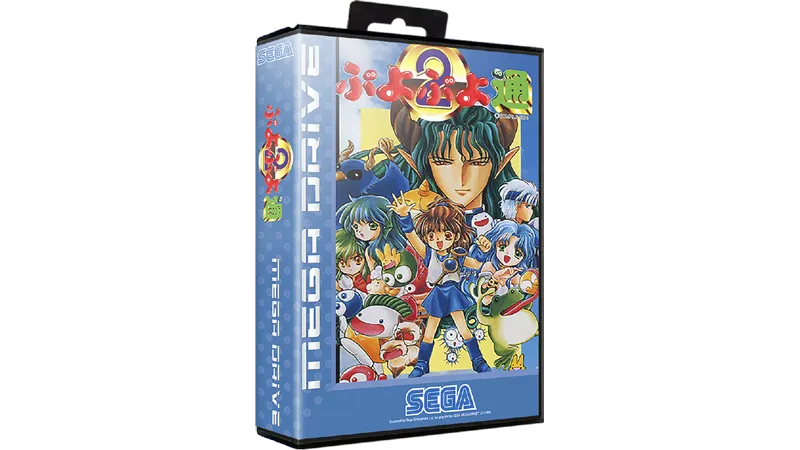


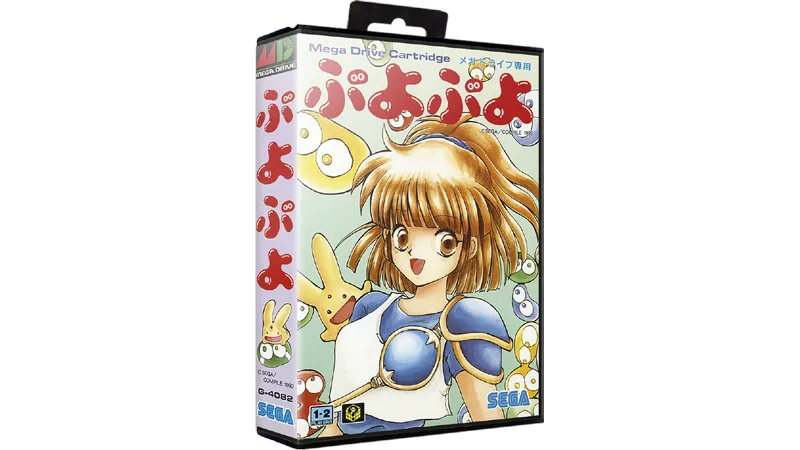

Puyo Puyo arrived on the Mega Drive as a flawless translation of the arcade phenomenon that redefined the competitive puzzle genre. While Nintendo had Tetris, SEGA found its match in Compile’s falling-blob masterpiece, offering a more aggressive, combo-based experience. The core loop revolves around connecting four "Puyos" of the same color, but the true depth lies in setting up massive chain reactions that flood the opponent’s screen with garbage blocks. Its vibrant presentation and frantic pace made it an immediate standout, proving that the hardware could handle complex logic and rapid-fire sprite manipulation with ease.
The aesthetic appeal of Puyo Puyo is rooted in its whimsical "Madou Monogatari" universe, providing a personality that many contemporary puzzlers lacked. Each character encounter in the single-player scenario offers a distinct AI pattern, forcing players to adapt their stacking strategies. The sound design is equally iconic, featuring high-pitched synthesized voices that punctuate every successful chain, creating a pavlovian sense of satisfaction. Even decades later, the pixel art remains sharp, and the legendary two-player mode remains one of the most balanced and addictive experiences available on 16-bit hardware.
By the mid-nineties, the puzzle landscape was reaching a saturation point with titles like Zoop hitting UK and European shelves in 1995; interestingly, while Zoop found a home in the West that year, it never saw a release on the Japanese Mega Drive. Puyo Puyo, however, remained the gold standard in the East, eventually crossing the ocean rebranded as Dr. Robotnik's Mean Bean Machine. This original Japanese release captures the pure, unadulterated charm of the franchise before the localized face-lifts, serving as an essential cornerstone for any serious import enthusiast's library.