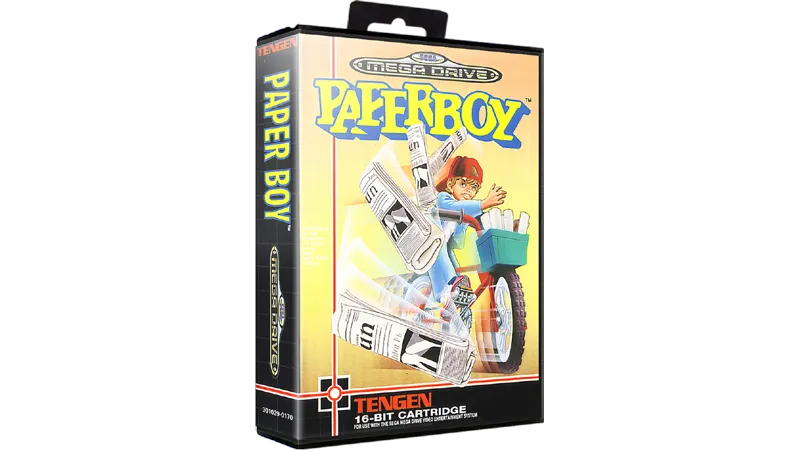


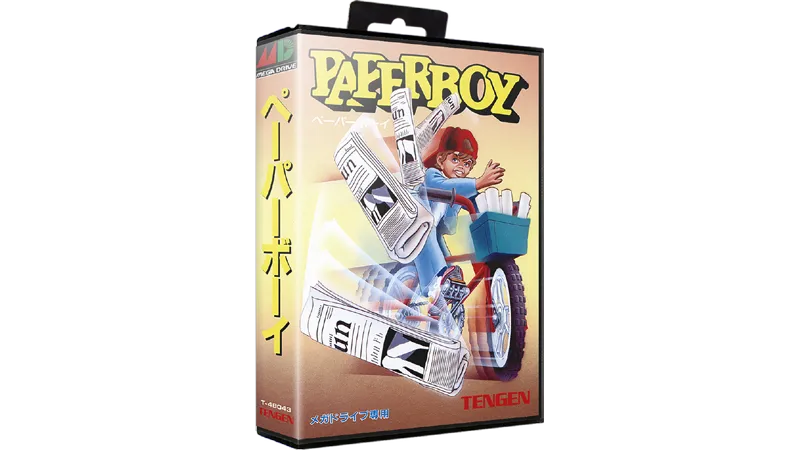

Tengen’s conversion of the Atari Games arcade classic arrived on the Mega Drive with a level of fidelity that significantly outclassed its 8-bit predecessors. The core premise remains one of gaming’s most distinct loops: navigating a hazardous isometric suburb to deliver newspapers to loyal subscribers while gleefully vandalizing the homes of those who haven't paid up. It is a frantic balancing act of resource management and twitch reflexes, where a stray dog, a runaway tire, or even the Grim Reaper himself can end a perfect streak, forcing players to master the tricky diagonal movement that defines the experience.
Visually, this version captures the bright, suburban aesthetic of the arcade cabinet effectively, though it lacks the crisp digitized voice samples and some of the finer environmental details found in the coin-op original. The three difficulty tiers—Easy Street, Middle Road, and Hard Way—provide a solid learning curve, though the inherent frustration of the isometric perspective remains the game's most significant hurdle for modern players. While the music is a faithful recreation of the iconic, jaunty theme, it can become grating during extended play sessions, acting as a repetitive rhythmic backdrop to the escalating suburban carnage.
Despite the simplicity of its design, Paperboy retains a compelling "one more go" quality, largely due to the satisfying physics of the paper tosses and the high-score chasing nature of the end-of-day obstacle course. It doesn't push the Mega Drive hardware to its technical limits, but as a pure arcade-to-home port, it succeeds in delivering a fun, albeit brief, challenge. It remains a quintessential piece of early 90s gaming that perfectly captures an era where even the most mundane of summer jobs could be transformed into a high-stakes, obstacle-filled gauntlet.