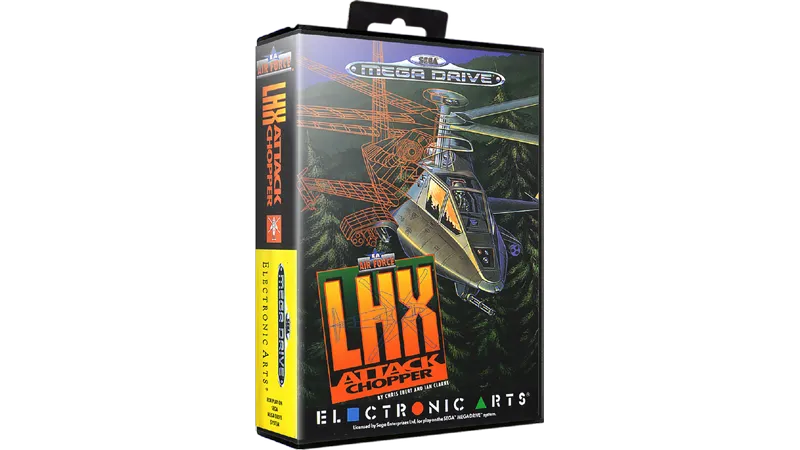


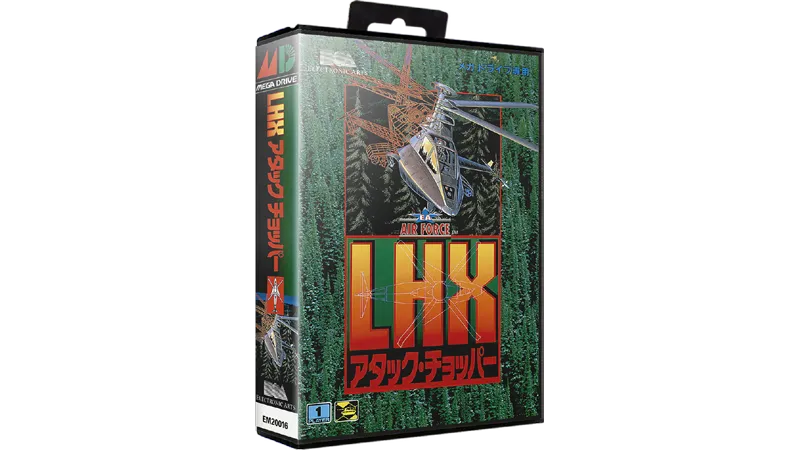

LHX Attack Chopper stands as a technical marvel of its era, pushing the Sega Mega Drive’s Motorola 68000 processor to its absolute limits by attempting full 3D polygon graphics without the aid of specialized hardware chips. Originally a PC title by Electronic Arts, this port brings a surprisingly deep flight simulation experience to the home console market. While the frame rate significantly drops when the screen becomes cluttered with enemy tanks and SAM sites, the sheer ambition of rendering a 360-degree environment with flat-shaded polygons remains an impressive feat of programming that sets it apart from its 2D sprite-based contemporaries.
Players take command of either the titular LHX prototype or the legendary AH-64 Apache, embarking on missions across various global hotspots like Libya and Vietnam. The gameplay loop demands more tactical patience than the average arcade shooter; you must carefully balance altitude, speed, and weapon systems while navigating a radar display that is genuinely functional. Mastering the controls on a standard three-button pad requires a steep learning curve, but once it clicks, the sense of depth provided by the varied mission objectives—ranging from search-and-destroy to troop extraction—offers a level of sophistication rarely seen in early nineties console gaming.
However, the passage of time hasn't been entirely kind to LHX’s aesthetic presentation. The aggressive visual "pop-up" and the stuttering movement can make low-altitude maneuvers disorienting, and the lack of an in-game music track leaves the experience feeling somewhat sterile and clinical. Compared to the fluid, isometric action found in Electronic Arts' own Strike series, LHX feels more like a rigorous, slow-paced simulation than a high-octane action game. It is a title for the patient player who appreciates the historical significance of 3D gaming’s infancy, serving as a gritty, honest precursor to the flight simulators that would eventually define the 32-bit generation.