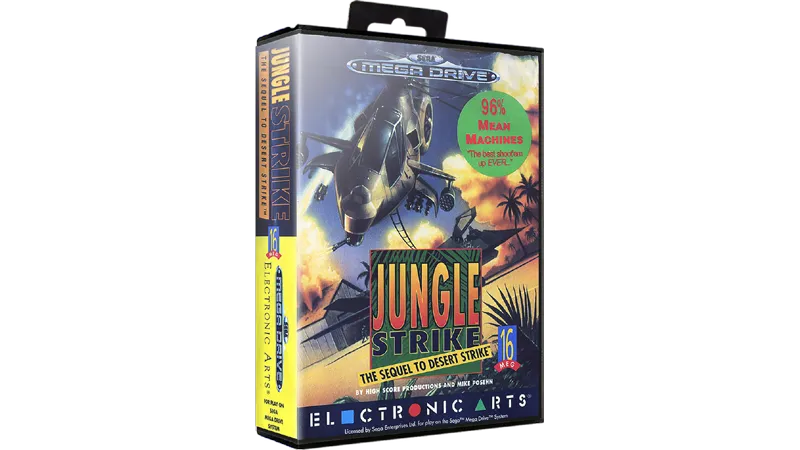
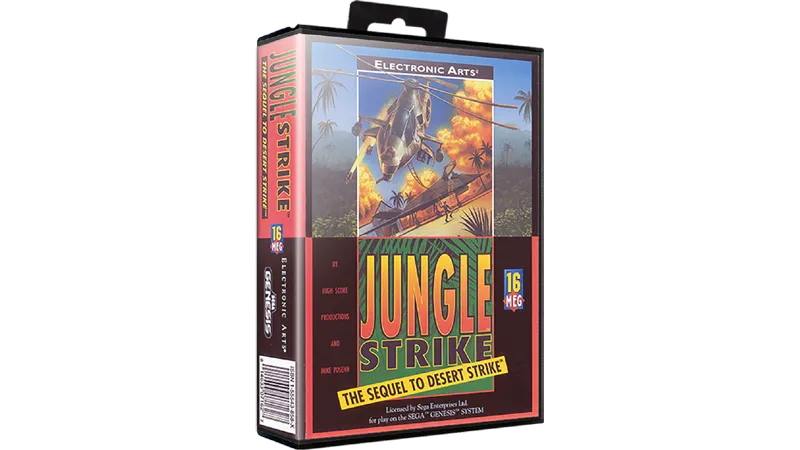
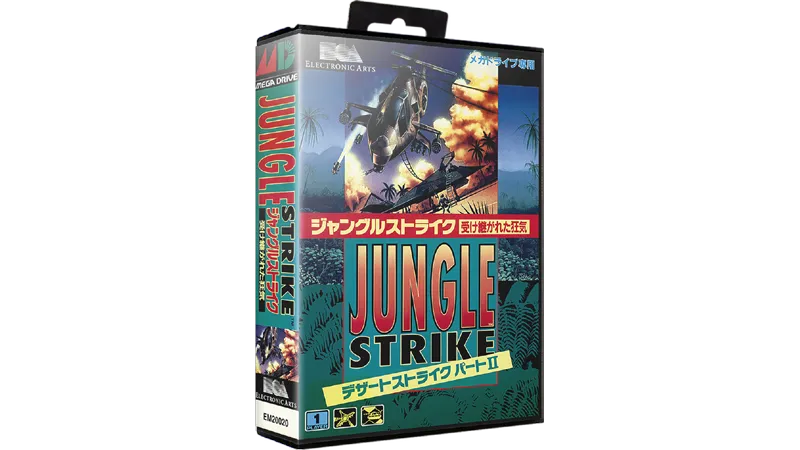



Jungle Strike took everything that made Desert Strike a household name and amplified it to a frantic, high-stakes degree. Eschewing the monochromatic yellow of the Gulf War setting, this sequel plunges players into a lush, isometric world of South American rainforests, urban Washington D.C. sprawls, and icy sub-arctic bases. The core loop remains a tense balancing act of resource management; every mission requires a calculated dance between hunting targets and scouring the map for fuel drums, armor crates, and ammunition. While the Comanche helicopter remains your primary tool of destruction, the addition of the hovercraft, motorbike, and stealth fighter adds a much-needed layer of mechanical variety that keeps the campaign from ever feeling stagnant.
Technically, the game is a marvel for the Mega Drive hardware, showcasing Electronic Arts at the peak of their 16-bit powers. The explosions are punchier, the framerate holds steady even during intense firefights, and the sound design—from the distinctive thud-thud of rotor blades to the digitized speech—is deeply immersive. However, the difficulty curve is notoriously steep; the AI is aggressive, and one wrong move or missed fuel pick-up can lead to a crushing "Game Over." It demands a strategic mind, requiring players to plan their routes across the map to maximize efficiency, making it feel less like a mindless shooter and more like an aerial tactical simulation.
The narrative stakes feel appropriately heightened, shifting from a regional conflict to a global threat involving the son of the original antagonist and a nuclear-armed drug lord. This cinematic flair is bolstered by impressive cutscenes that were significantly ahead of their time for a cartridge-based game. It remains a quintessential 16-bit experience and is widely considered the pinnacle of the "Strike" trilogy on Sega's hardware.