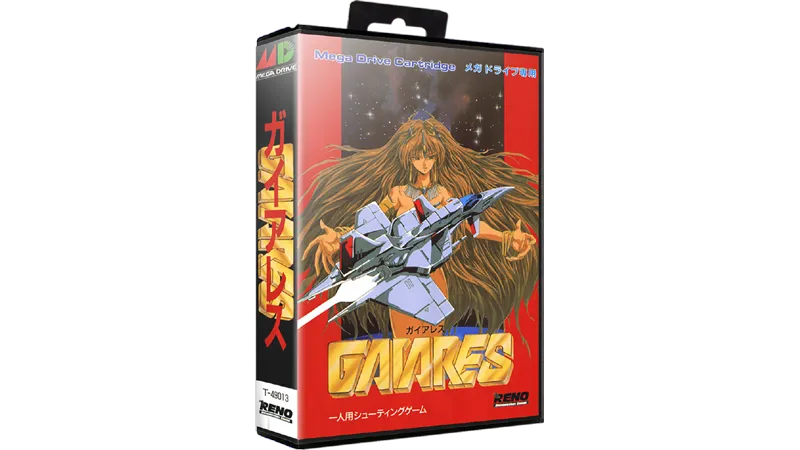

Gaiares stands as a titan of the 16-bit shooter genre, pushing the Mega Drive hardware to its absolute limits during its early years. Developed by Telenet Japan, the game is renowned for its high-octane action and a visual style that perfectly captures the aesthetic of late-80s sci-fi anime. The parallax scrolling is exceptionally smooth, and the boss designs are massive, screen-filling spectacles that showcase the console's ability to handle complex sprites without significant slowdown. It is more than just a technical marvel; it is a masterclass in atmospheric world-building through pixel art, offering a cinematic experience that felt revolutionary upon its 1990 release.
The core hook that separates Gaiares from its contemporaries is the innovative "TOZ" system, which allows players to launch a satellite device to "capture" enemy weapon data. This creates a strategic layer rarely seen in horizontal shooters, forcing you to constantly experiment with various power-ups—from homing lasers to wide-spread shots—depending on the specific threats on screen. However, this depth comes with a steep learning curve. Gaiares is notoriously unforgiving, demanding pixel-perfect positioning and intense memorization of enemy patterns, making it a title reserved for those who relish a high-stakes challenge and have the patience to master its brutal stages.
While titles like Thunder Force IV often receive the most mainstream acclaim, Gaiares remains a definitive cult classic for its unique identity and uncompromising design. It represents the pinnacle of Telenet’s output on Sega’s machine, balancing a deep mechanical hook with a pulse-pounding synth soundtrack. By the time 1995 rolled around and Mega Drive owners were looking toward the end of the console's life with titles like the puzzle game Zoop—which notably saw a release in the UK and Europe but skipped the Japanese Mega Drive entirely—Gaiares had already cemented its legacy as a must-play import for serious action fans.