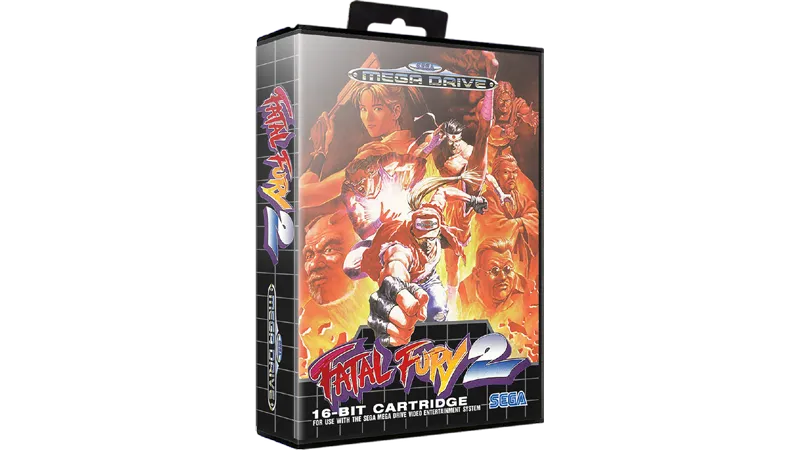
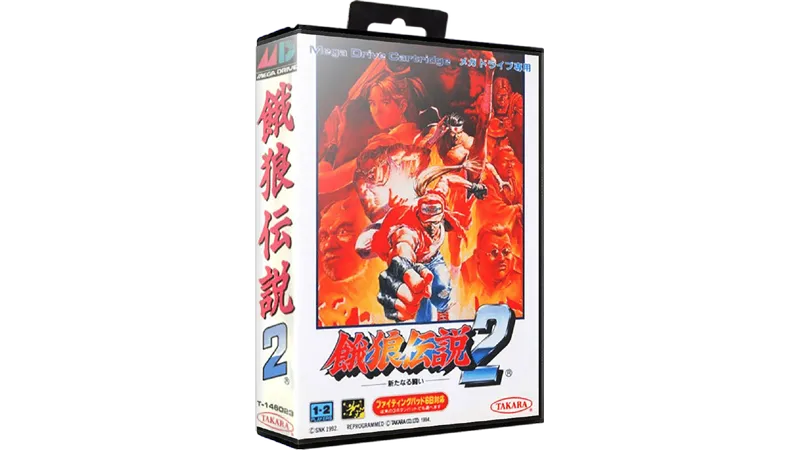



When Takara stepped up to port SNK’s flagship brawler to the Mega Drive in 1994, the skepticism was palpable. Cramming a massive Neo Geo AES cartridge into a 24-megabit Mega Drive shell required significant wizardry, and for the most part, the transition is remarkably successful. While the color palette naturally takes a hit compared to the arcade original—resulting in some grittier, darker backgrounds—the core essence of the 100-Mega Shock experience remains intact. The sprites are sizeable and the animation retains enough frames to keep the action fluid, even if the famously "crunchy" voice samples serve as a constant reminder of the hardware's audio limitations.
The gameplay introduces the refined two-plane system that defined the early era of Fatal Fury, allowing combatants to leap between the foreground and background to dodge projectiles or set up flanking maneuvers. This version includes all eight original playable characters, including the debut of fan-favorites Kim Kaphwan and Mai Shiranui, along with the four playable bosses accessible via a cheat code. Notably, Takara included a "Speed" setting which allows players to crank the tempo up to three stars, effectively fixing the sluggish pace found in the Super Nintendo port and making this version the preferred choice for those who value competitive responsiveness over graphical fidelity.
Ultimately, Fatal Fury 2 stands as one of the more robust fighting games in the Mega Drive’s library, bridging the gap between the simplistic first entry and the technical excellence of the later "Special" and "Real Bout" iterations. It captured the high-stakes atmosphere of the King of Fighters tournament without requiring the astronomical investment of the SNK home system. While it would eventually be superseded by its own "Special" update just a year later, this port remains a testament to how well the Mega Drive could punch above its weight class when handled by developers who understood its unique architecture.