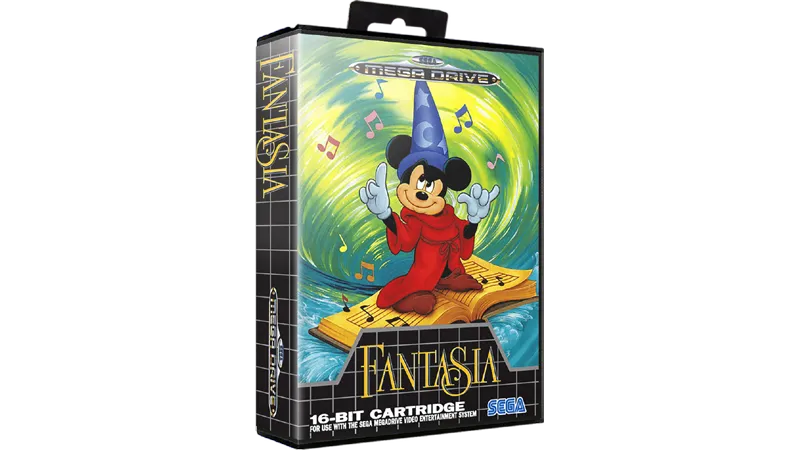
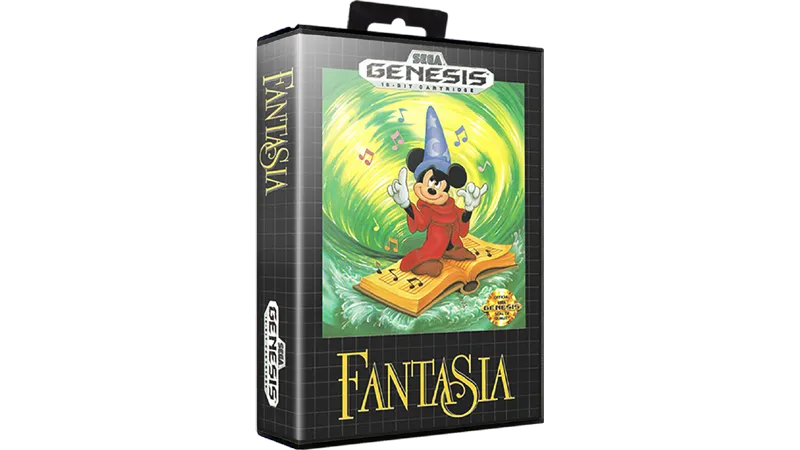
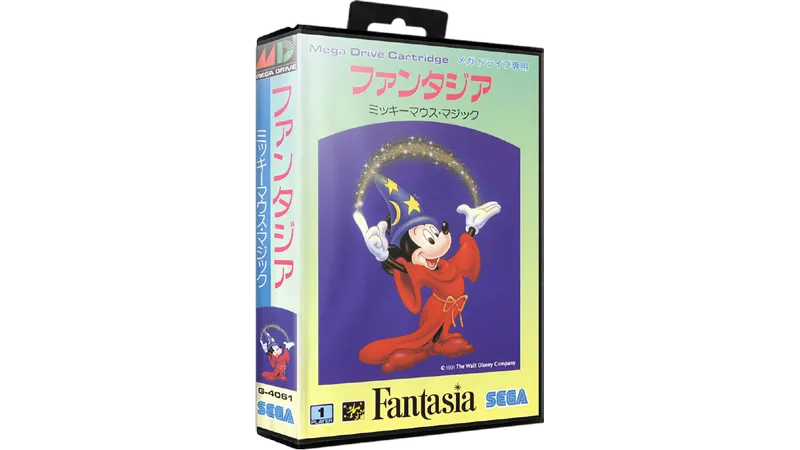



Developed by Infogrames and released in 1991 to coincide with the film’s 50th-anniversary home video debut, Fantasia on the Mega Drive remains one of the most visually deceptive titles in the 16-bit library. At first glance, the game captures the whimsical, hand-drawn aesthetic of the 1940 cinematic masterpiece, featuring vibrant sprites and backgrounds that lean heavily into the Sorcerer’s Apprentice theme. The iconic classical score is present, attempting to translate Bach and Tchaikovsky through the console’s Yamaha YM2612 sound chip, though the results are often tinny and lack the orchestral majesty required to do the source material justice.
Unfortunately, any goodwill earned by the presentation evaporates the moment Mickey Mouse begins to move. The gameplay is fundamentally broken, plagued by some of the most unresponsive controls and egregious hit detection found on the system. Mickey’s jumping physics are floaty and imprecise, making the mandatory platforming sections a grueling exercise in trial and error. Enemies frequently spawn in unavoidable positions, and the lack of a temporary invincibility window after taking damage means players can see their health bar vanish in a matter of seconds, leading to a level of frustration that far exceeds the game’s "all-ages" branding.
Ultimately, Fantasia serves as a cautionary tale of a rushed production cycle prioritizing brand recognition over playability. While it succeeded in looking like a premium Disney product during the early years of the console war, it lacks the polish and charm found in contemporaneous titles like Castle of Illusion. It is a title that collectors may appreciate for its historical significance and striking box art, but as a software experience, it remains a difficult recommendation for anyone looking for actual entertainment. It stands as a rare misstep in Disney’s otherwise stellar 16-bit partnership with Sega, proving that even the most beautiful animation cannot save a fundamentally flawed mechanical core.