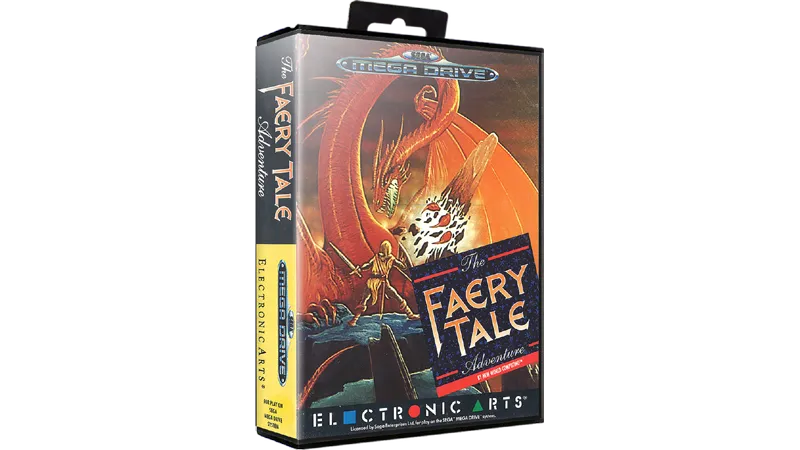
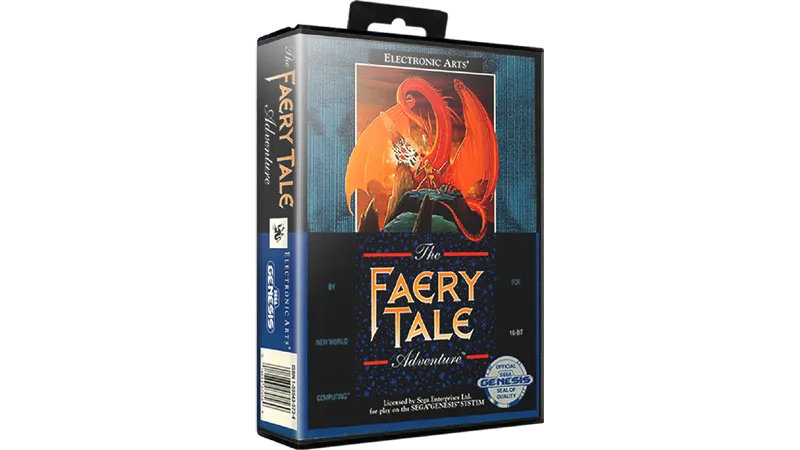



Originally an Amiga powerhouse, The Faery Tale Adventure’s transition to the Mega Drive in 1991 brought one of gaming’s earliest truly open worlds to the home console audience. Players take control of three brothers—Julian, Phillip, and Kevin—on a high-fantasy quest to recover a stolen talisman from a dread Necromancer. The game is defined by its isometric perspective and a sheer sense of scale that was largely unprecedented for the era, offering a non-linear experience that prioritized free-form exploration over the rigid, guided objectives found in many contemporary RPGs.
The core hook lies in the unique "lives" system; if the eldest brother dies, the next in line picks up the mantle, requiring the player to travel back to the site of the previous death to reclaim lost equipment. This mechanic adds a layer of tension to the massive world of Holm, which famously consists of over 17,000 individual screens. Navigating this vast landscape requires careful inventory management and an understanding of the day-night cycle, though the lack of a comprehensive in-game map often transforms the journey into a confusing odyssey for the unprepared traveler.
Despite its ambitious scope, this port suffers from sluggish character movement and a combat system that feels remarkably imprecise compared to console-native titles like Landstalker. The visuals are functional but stripped of the vibrance found in the Amiga original, and the repetitive audio loop can become grating during the long treks across the countryside. While it remains a fascinating relic of Western RPG design and a milestone for world-building on 16-bit hardware, modern players may find the glacial pace and cryptic progression more of a technical curiosity than an engaging adventure.